01
Stable colour over long shifts
Low-heat COB or MIP modules and a calibrated brightness ceiling keep the wall comfortable to watch all day.
Industry solution
Readable maps at hour eight, not just at handover.
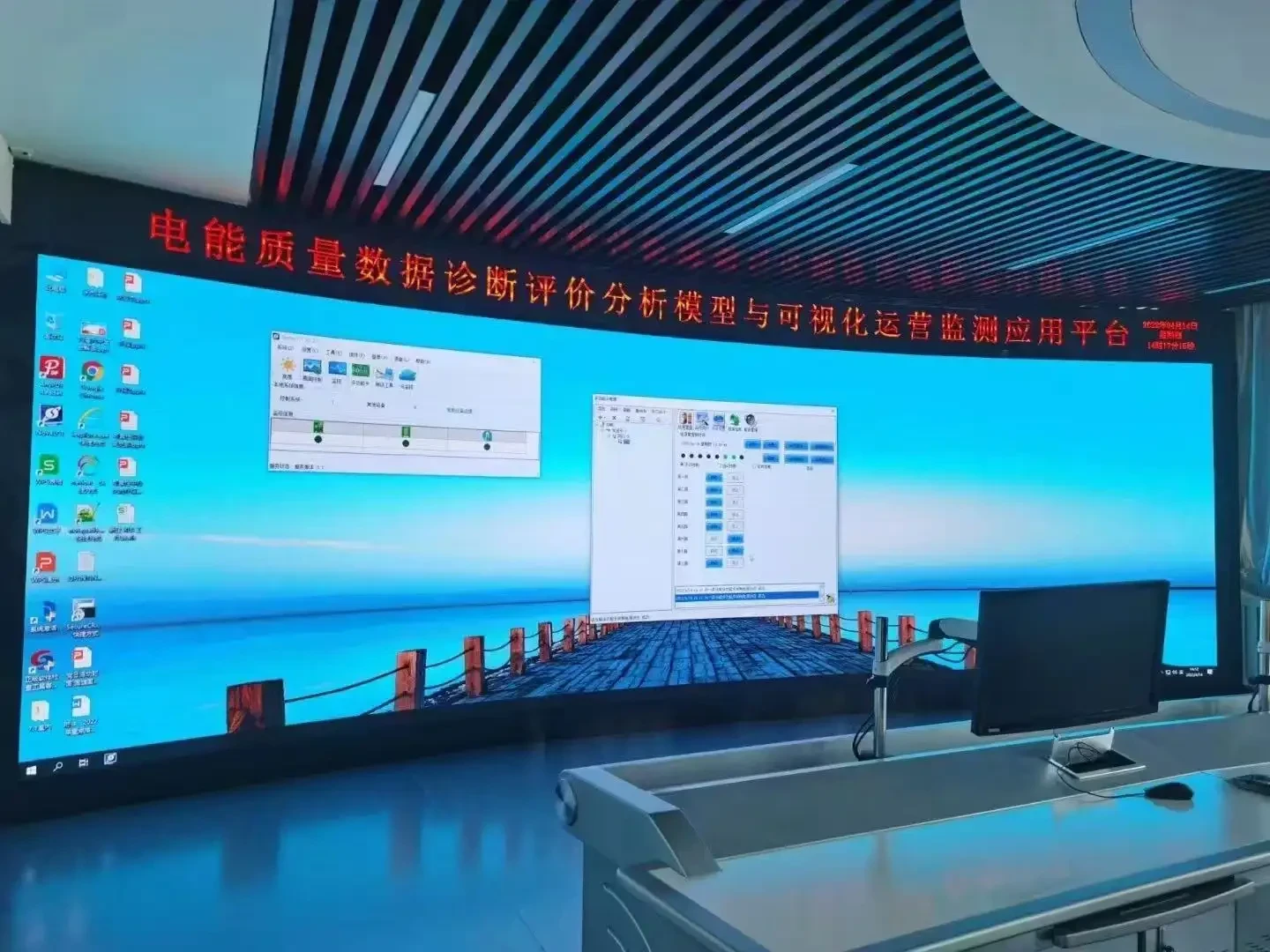
Readable maps, stable colour and no visible seams over long shifts.
Control rooms judge a display by what operators can read at hour eight of a shift. We specify fine pitch from room depth, control flatness and brightness uniformity, and plan redundant signal paths so a single failed module does not blank a wall.
Why this specification wins
Selected from the site constraints above, not from a catalogue habit.
01
Low-heat COB or MIP modules and a calibrated brightness ceiling keep the wall comfortable to watch all day.
02
Flatness, cabinet layout and adjustment access are drawn and approved before the first cabinet is built.
03
Dual controllers and documented source switching prevent one failed module from blanking the whole wall.
These are the constraints we check before recommending a series or a pixel pitch.
P0.9 or P1.25 selected from the farthest operator seat, not from catalogue habit.
Cabinet flatness, seam planning and ceiling or floor mount drawings issued before production.
Dual controllers, backup sources and a documented switching procedure.
Brightness calibration sheet, spare module set and operator briefing on site.
Most projects combine two of these. Each series page lists models, specifications and the pitch range available.
P0.7–P1.9 with 200,000:1 contrast
View seriesP0.9–P1.8 with sealed pixel packaging
View seriesCost-controlled walls for secondary rooms
View seriesA 200+ m² COB P0.9 wall runs continuously for network monitoring at ZTE.
Tell us the environment and we will share the closest installed configuration.