Outdoor P2.6
2.97mm- Brightness
- ≥7,000 cd/m²
- Avg power
- 180 W/m²
- Cabinet size
- 1000×1000×90mm
Outdoor Fixed LED Display · Product Series
P2.6 · P3.9 · P4 · P4.8 · P5 · P6.25 · P6.67 · P10
IP65 common-cathode cabinets built for facade and roadside media. High brightness holds up in direct sun, while the sealed enclosure and thermal design handle rain, dust and temperature swings.
5,500–13,000 nits
Brightness for sunlit walls
IP65
Sealed front and rear for rain and dust
Common cathode
Lower heat and running cost
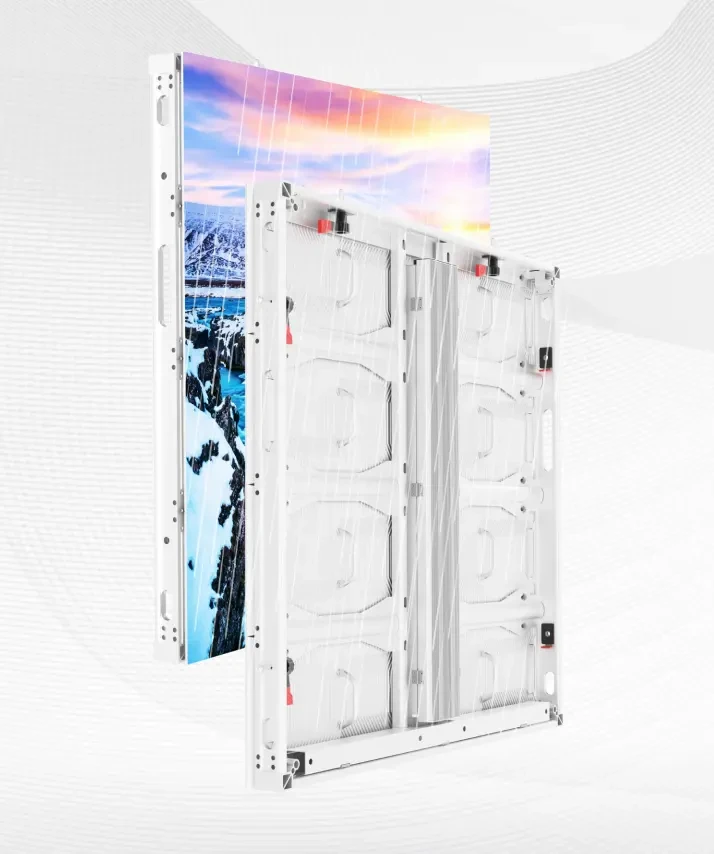
The fixed-series outdoor platform: a CNC-machined aluminium profile cabinet, 500 × 250mm aluminium-base module, common-cathode drive and front or rear service.
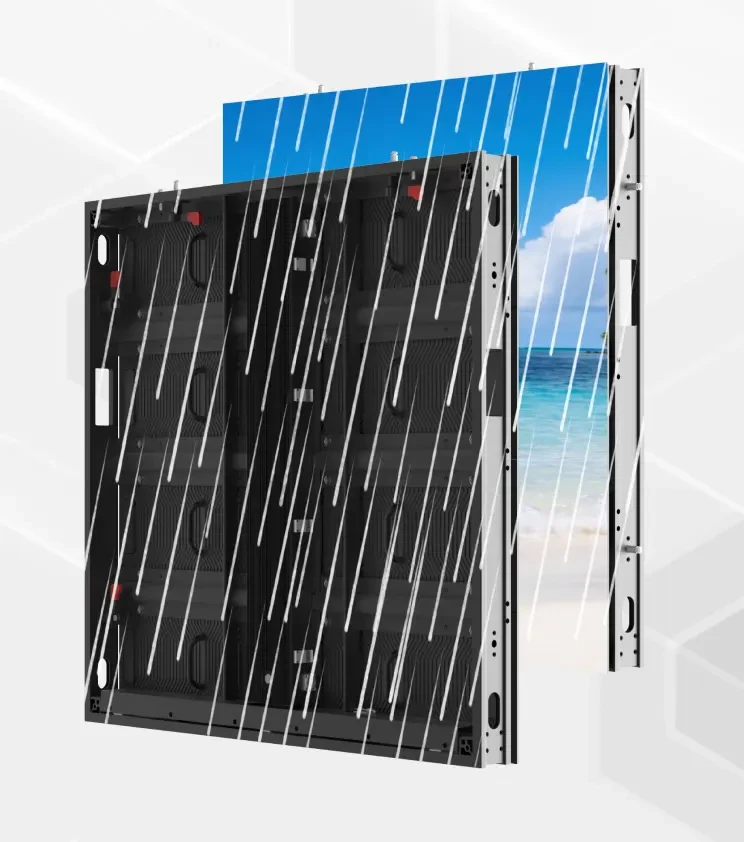
The 960 × 960mm aluminium cabinet platform shared by P4, P5, P8 and P10. P4, P5 and P8 use eight 480 × 320mm modules in a 2 × 4 layout; P10 uses six modules in a 2 × 3 layout, with stainless-steel quick locks and front or rear access.
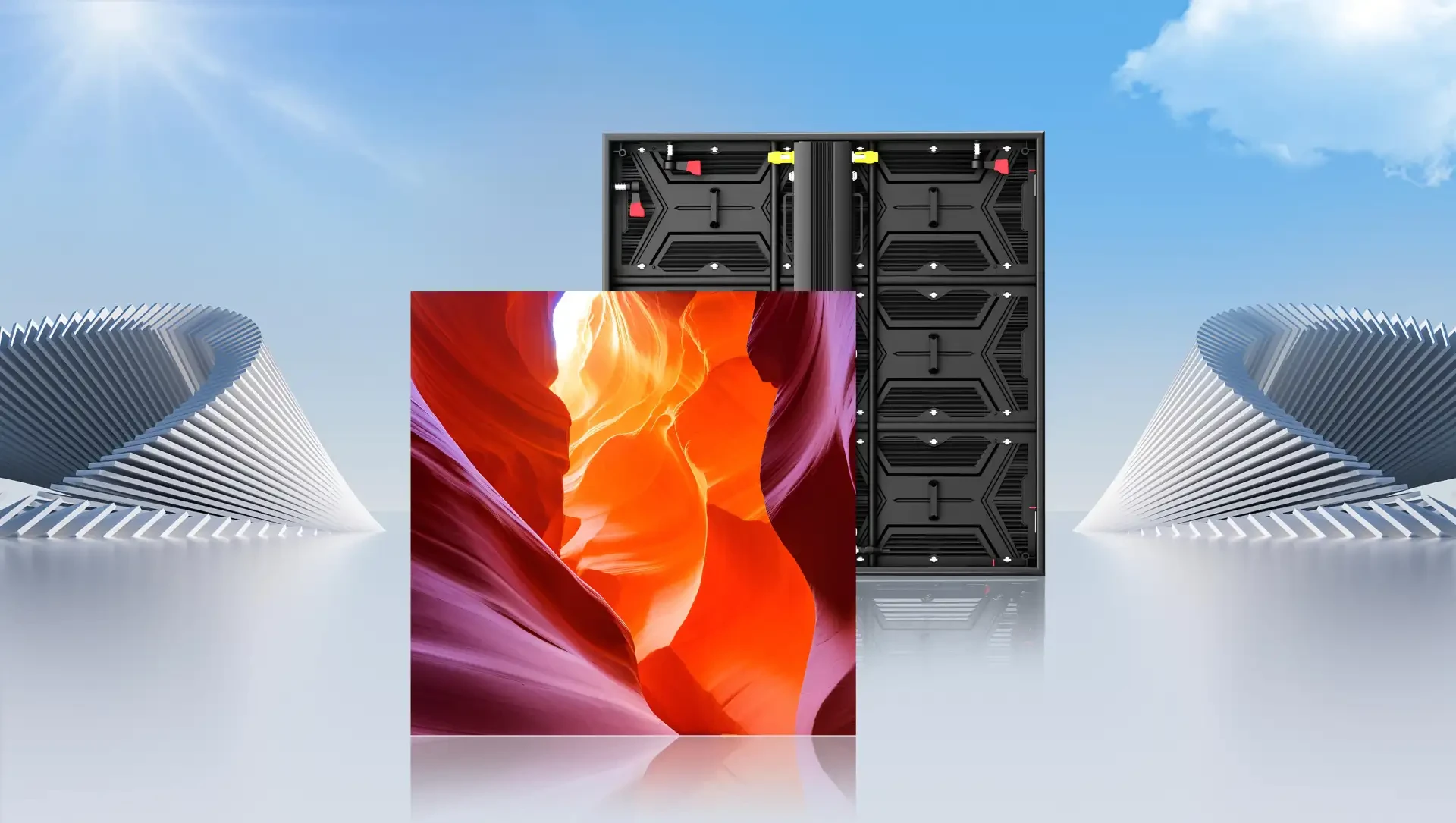
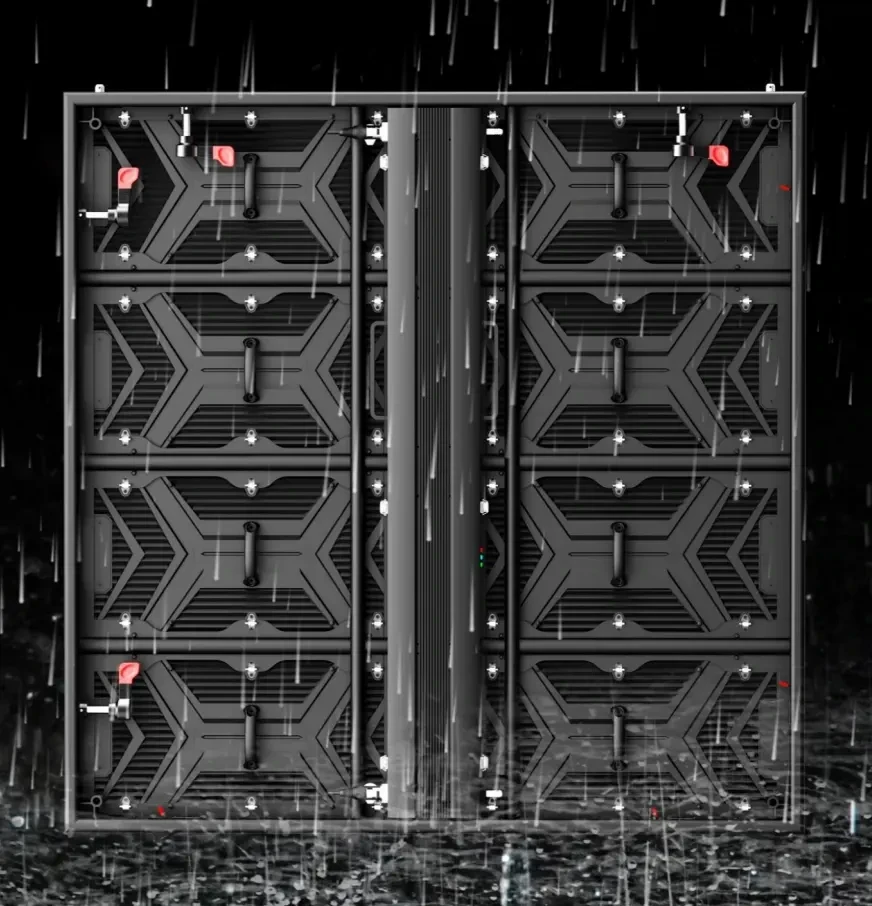
A 960 × 960mm outdoor cabinet retained for long-throw and replacement projects where the existing structure and cabinet count are already fixed.
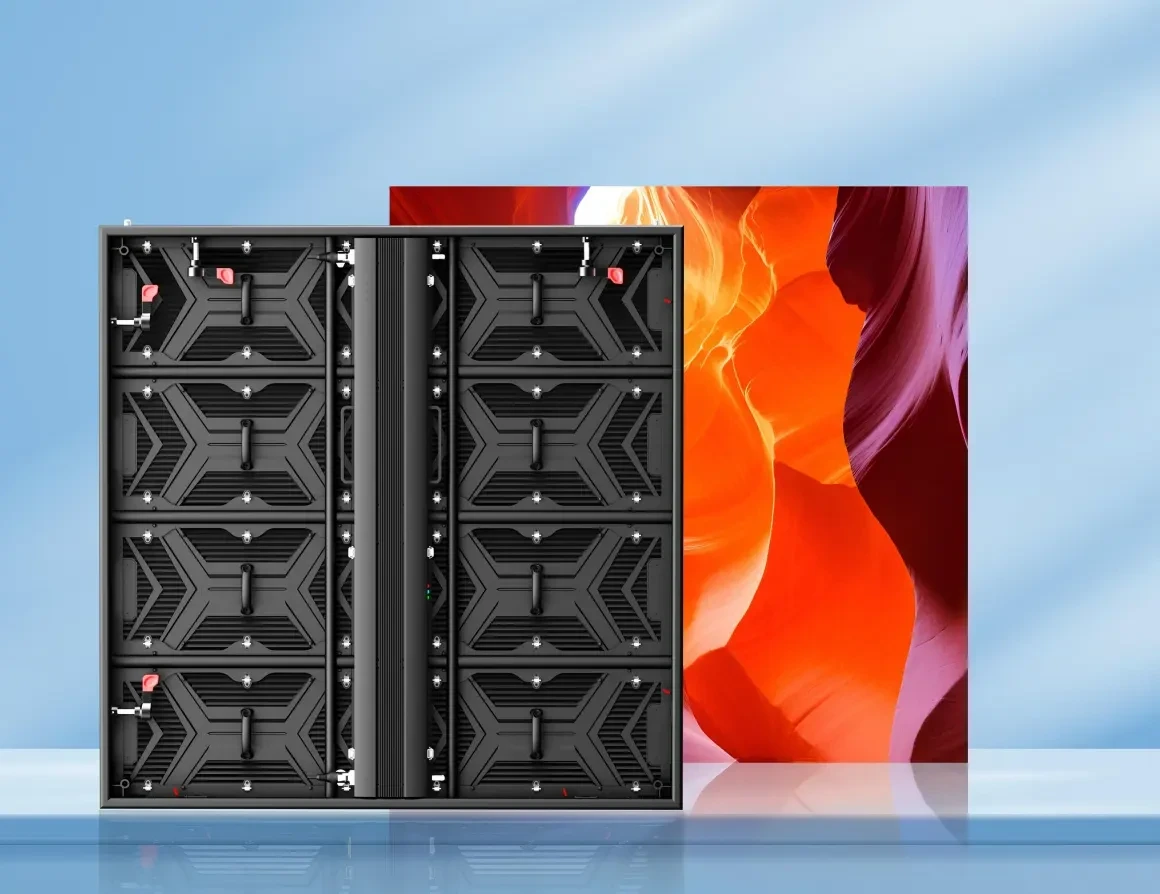
Sealed front and rear for rain and dust.
Readable in direct sunlight.
Lower power and heat than standard drive.
Coated cabinets for coastal and humid sites.
Outdoor Fixed LED Display
outdoor fixed LED display is built around a sealed 1000 × 1000 × 90 / 960 × 960 × 88.5mm cabinet. The front module, gasket, rear cover and pressure path are designed as one weather system, so rain, dust and thermal expansion do not open a path into the electronics.
A continuous gasket runs around the module and rear cover. Cable entries use sealed glands, and the cabinet is tested before packing.
The LED module sits against a thermal path that spreads heat across the cabinet back. The heat sink is isolated from the sealed electronics chamber.
Power supplies and receiving cards are mounted in a protected chamber with a separate service cover, keeping water away from live connections.
Mounting points are sized for the cabinet weight and site wind load. The structure is confirmed against the installation height before production.
Outdoor Fixed LED Display · Outdoor fixed installations
Corner walls, retail cubes, curved night displays and highway billboards. Each installation is shaped by viewing distance, structure and the service route.
Selected outdoor fixed installations. Final cabinet, brightness and service layout follows the site survey.
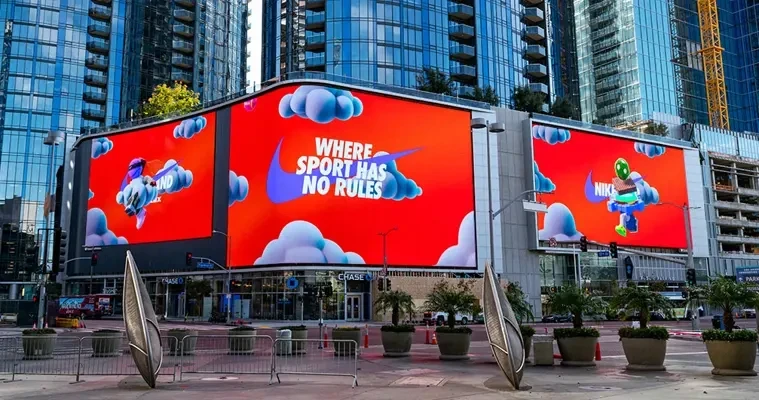 01
Building corner wall
Two faces meet at a sharp building corner above street level. The cabinet layout follows the edge, keeping the image continuous through the bend.
 02
Retail corner cube
A compact two-face cube sits above a storefront, carrying brand content at close viewing distance while keeping the shopfront visible.
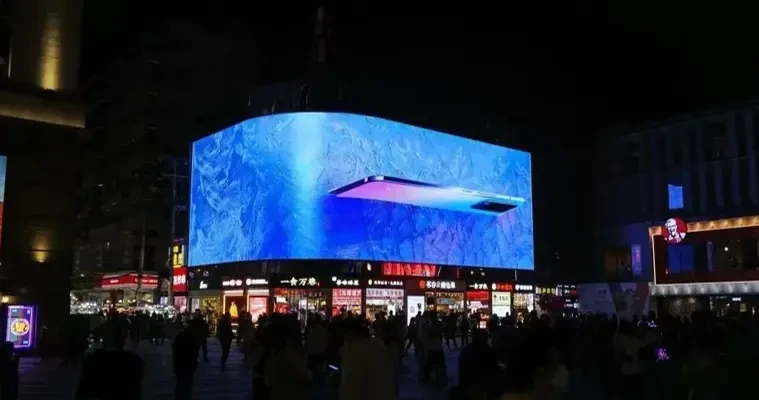 03
Curved night corner
A curved corner wall follows the building line and stays readable against surrounding shop lighting. Automatic dimming keeps the night image balanced.
 04
Corner media wall
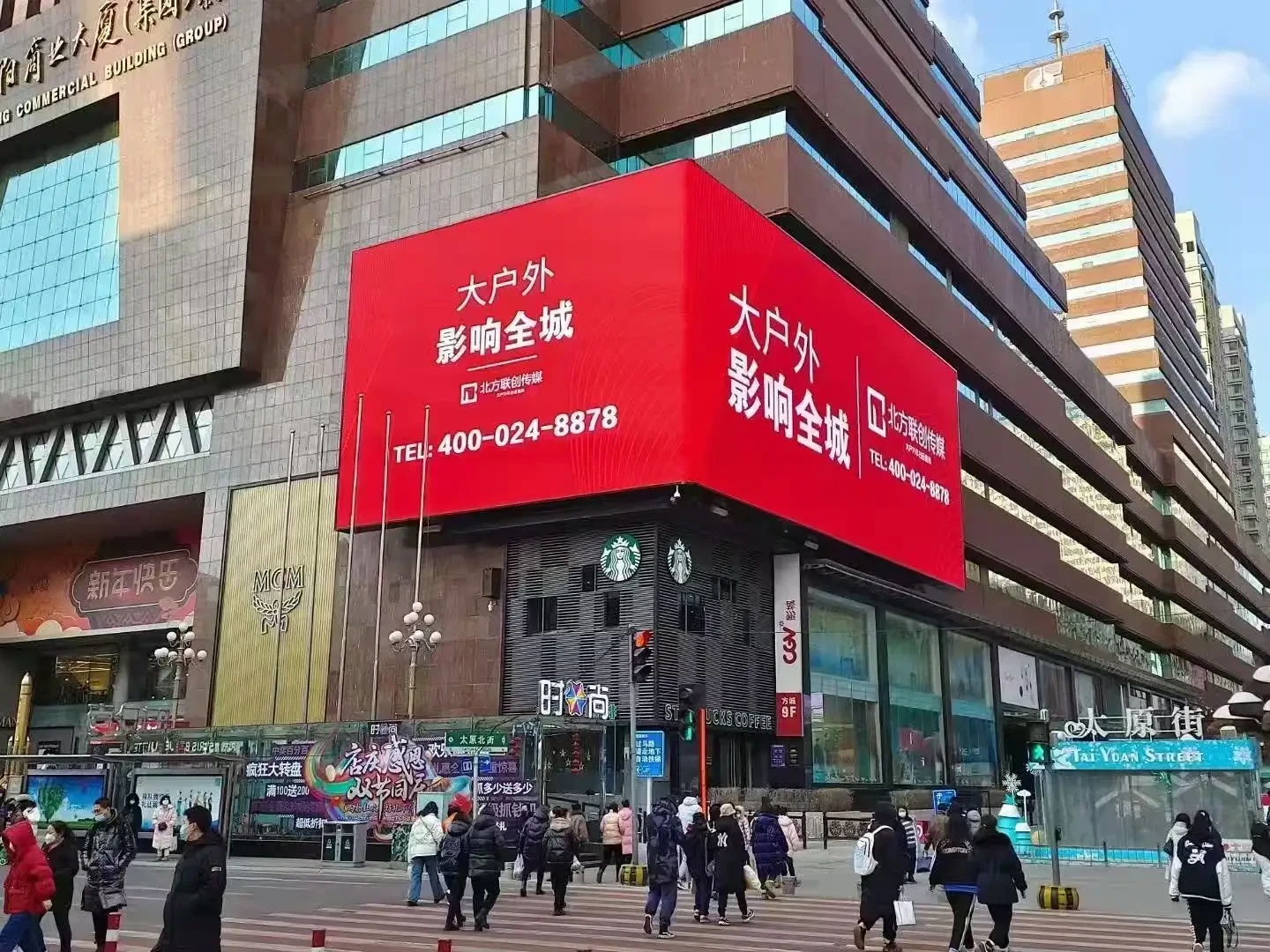
A large corner wall combines several faces above a busy street, with sealed cabinets and a service route planned for the structure.
 05
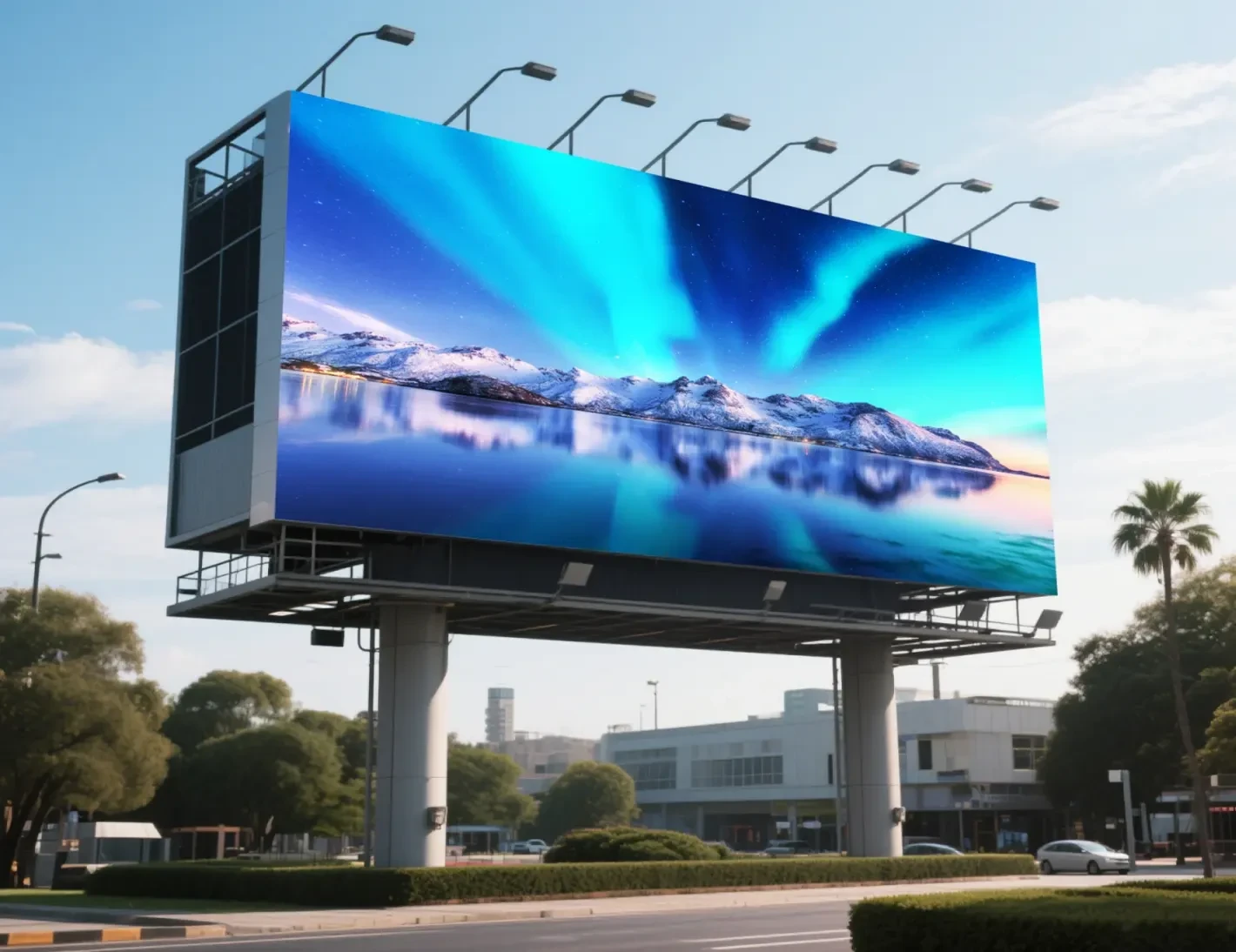
Highway billboard
A double-column steel structure carries a long-throw LED billboard, specified for direct sun and viewing from passing traffic.
 06
Midtown corner wall
A flush corner wall above a hotel entrance carries high-brightness content at close-to-mid viewing distance, with front or rear service access.
Planning a similar outdoor wall? Send the wall size, viewing distance and mounting structure.
Discuss a similar projectThe decisions that affect how Outdoor Fixed LED Display looks, installs and stays serviceable on site.
The cabinet is shaped so water runs away from the module seam. Service covers overlap the opening rather than sitting flush, which is what keeps a facade dry in driving rain.
5,500–13,000 nits output is paired with automatic brightness control, so the wall stays readable at noon without glare at night.
Module and cabinet materials are selected to expand together. The module fixing allows controlled movement instead of stressing the LED board.
Cabinet surfaces are coated for humid and coastal sites. Fixings and grounding points are specified for long-term outdoor service.
Service is planned before the wall is built. Modules, cards and power supplies are replaced from the access direction agreed on the drawing.
Modules can be released from the front where the wall faces a road or facade with no rear access. The service procedure keeps the gasket path intact.
Where a rear walkway exists, power supplies and receiving cards are reached through a separate sealed cover without opening the module face.
Service visits include a gasket inspection and drainage check. Replacement modules are supplied with the correct seal kit for the cabinet revision.
Product credibility
Outdoor Fixed LED Display is built on the same production line as our project walls. Cabinets, modules and control settings are recorded per batch, and the documentation travels with the shipment so the site team is not working from memory.
ISO 9001
Factory process control
CE / RoHS / FCC
Product compliance
Batch tested
Aging and calibration record
2–3 years
Standard warranty
Large-format media walls for city visibility.
High brightness for long viewing distance.
Stable output under direct sun and rain.
Durable information and advertising walls.
Outdoor fixed selection and delivery
Brightness is only one part of an outdoor specification. Water paths, wind load, thermal expansion and service access determine whether the wall still performs after the first rainy season.
P2.6–P4.8 for close street viewing and building entrances; P6.67–P10 for roadside, facade and stadium distances where the nearest viewer is beyond 10 m.
IP65 depends on gasket continuity, cable glands and cover overlap, not on a single rating label. The cabinet should shed water away from the module seam and service openings.
Mounting points, wind load and the service route are reviewed against the installation height. Front service is used where the wall faces a road or facade with no rear walkway.
Deployment playbook
A roadside billboard, a building facade and a stadium perimeter use different cabinet formats, brightness levels and service strategies.
The wall must stay readable in direct sun and dim at night. Automatic brightness control, high output and a sealed enclosure are the base requirements.
P4–P8 · 5,500–13,000 nits · auto dimming
Wind load and fixing detail dominate. The cabinet and support frame are reviewed together, with service access planned from the facade or a maintenance walkway.
P6.67–P10 · IP65 · wind-load frame
The wall is close to the pitch and on broadcast cameras. High refresh, fast-lock cabinets and a service plan for match days are part of the specification.
P4.81–P6.67 · >7680Hz · fast service
Delivery control
Outdoor cabinets are assembled and sealed before packing. The factory check covers gasket continuity, cable entry and the service covers that are most likely to be opened on site.
Handover pack
Cabinet layout, control points, power distribution and the service direction are fixed before materials are cut. The approved drawing becomes the reference for every later check.
LED modules, driver ICs and power supplies are drawn from the same production batch where the order size allows, then labelled by cabinet position.
Assembled cabinets run through an aging cycle and white-balance calibration. Faults found at this stage are corrected before packing, not after arrival.
Cabinets are packed against the transport method and site access. The packing list includes the seal kit, service gaskets and the fixing schedule for the approved structure.
Buyer questions
These are the points that most often change the specification after the first enquiry. If your question is not here, send it with the site details.
Ask an engineerIP65 is the starting point, but coastal sites also need corrosion protection, suitable fixings and a maintenance schedule. The cabinet finish and grounding detail are confirmed against the site conditions.
The mounting points and support structure are reviewed against the installation height, exposure and local requirements. The display cabinet is not specified in isolation from its frame.
Yes, front-service modules are available for walls with no rear access. Where a rear walkway exists, power supplies and receiving cards can be reached through a separate sealed cover.
Outdoor walls can be configured from 5,500 to 13,000 nits with automatic dimming. The final setting depends on orientation, viewing distance and local brightness rules.
Next step
Use the outdoor media guide and project references to confirm brightness, structure and service access.
See how this series is specified against viewing distance, room light and installation constraints.
Open application guideReview project types, cabinet formats and the delivery scope used on comparable installations.
View case studiesRequest the current specification sheet, cabinet drawing and control compatibility list.
Open downloadsSend the wall size, viewing distance and site photos. We reply with a configuration and quotation.
Request a quoteSend the mounting height and viewing distance. We will confirm pitch, brightness and structure.