A practical reference for architects, integrators and project owners evaluating transparent LED. It separates the three delivery routes — adhesive film, hanging mesh and framed transparent cabinets — and explains how transparency, brightness, pitch, glass condition, structure, power and content design interact. It also sets out the survey, commissioning and maintenance records that keep a see-through installation readable after handover. Prepared by the transparent display team at XL Technology, Shenzhen.
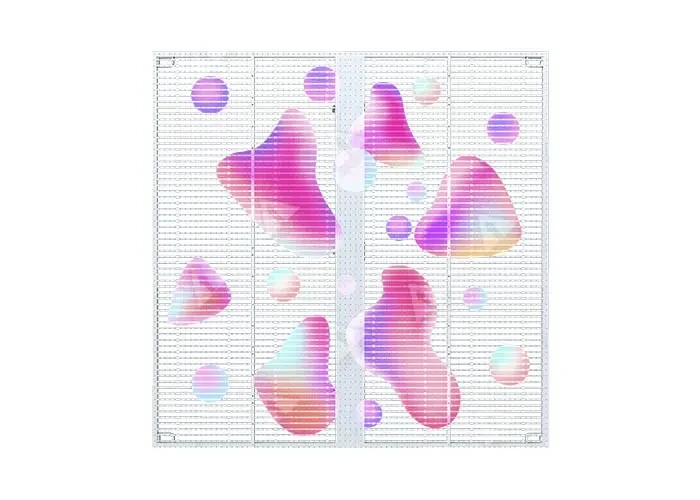
1. Three ways to make glass emit light
Transparent LED is a family of products, not a single panel. The three routes used in buildings behave differently in daylight, on glass, and in service. Adhesive film is bonded directly to an existing pane and adds almost no depth. Hanging mesh is suspended in front of a background and produces the floating-image effect used in retail and exhibitions. A framed transparent cabinet carries the LEDs in an aluminium frame and is specified where the installation must remain serviceable for years.
The choice should follow the building, not a product preference. Film suits leased shopfronts and interior partitions where drilling is not allowed. Mesh suits atriums, stage openings and launch displays where the screen can hang from a truss. Cabinets suit permanent facades, airport glazing and atrium walls where brightness and module-level service matter more than minimum weight.
XL Technology manufactures all three routes in Shenzhen, so the recommendation can follow the site rather than a single catalogue line. That matters at the early stage, when a single survey can compare film, mesh and cabinet options for the same opening.
- Film for existing glass with minimal structural change
- Mesh for suspended, temporary or floating-image effects
- Framed cabinets for permanent, serviceable facades
2. Start with the view through the glass
Transparency is the share of the glass area left free of LED and circuitry. It is not a cosmetic number: it decides how much daylight reaches the interior, how clearly products behind the glass remain visible, and how much brightness the screen needs to compete with the background. A 95% film and a 70% cabinet are not interchangeable, even when both are described as transparent.
Higher transparency leaves more of the view intact but reduces the light-emitting area, so the same content needs more brightness to read against a bright interior. Lower transparency gives the screen more presence, but it can turn a shop window into a dark band during the day. The right balance depends on what sits behind the glass and where the audience stands.
XL Technology's crystal film reaches up to 95% transparency, the holographic mesh sits at 80–90%, and the standard transparent cabinet range sits at 70–85% with brightness from 4,000 to 5,500 nits. The figures are a starting point, not a specification. Send the background, orientation and viewing distance, and the range narrows quickly.
- Transparency controls daylight and the view behind the glass
- Brightness and transparency trade against each other
- Choose the grade from the background, not from a brochure
3. Pitch follows the viewer, not the catalogue
Pixel pitch is the distance between LED pixels. On a transparent screen the pitch also affects transparency, because a wider pitch leaves more glass clear. A P2.6 cabinet is appropriate where people stand three to five metres away; P6.25 is the usual choice for shop windows and interior glass at four to six metres; P10 is used on tall facades and atriums where the nearest viewer is eight metres or more away.
The common mistake is to specify the finest pitch the budget allows. On a see-through wall, a finer pitch removes more glass area and can make the interior darker, while the extra resolution may never be visible from the pavement. The opposite mistake is to use a wide pitch where the content contains small text or product prices that must be read at close range.
Test the decision with content, not with a colour bar. Ask for a sample at the real viewing distance, with the real background and the real text size. XL Technology supplies module and film samples for this check, and the result is usually more useful than a specification sheet.
- P2.6 for close viewing, P6.25 for windows, P10 for large facades
- Wider pitch preserves more transparency
- Check text size at the real viewing distance
4. Glass, frame and the loads that are easy to miss
Film adds only 1.4–1.6 kg per square metre, but it still needs a compatible pane, a clean surface and a sealed edge. On exterior glass, the edge seal is the detail that decides whether moisture reaches the adhesive. On interior glass, the risk is different: cleaning chemicals, repeated contact and cable routes that cross an opening window.
A framed cabinet is heavier, typically 6.4–8.0 kg per square metre, and the structure must carry that load plus wind pressure on an exterior facade. The mullion spacing, fixing method and adjustment range belong in the structure drawing before production. A wall that cannot be adjusted after the building settles will be corrected with undocumented shims.
XL Technology issues a glass survey template and a cabinet layout drawing with each transparent project. The survey records pane dimensions, glass type and coating, mullion depth, orientation, shading, and the route from the screen edge to power and control. Those fields are the ones that change the quotation and the installation method.
- Film weight is low, but the edge seal is critical
- Cabinets need a structure drawing and adjustment range
- Survey the power and control route before production
5. Power, heat and control
Transparent screens are often installed in glazed spaces that already have limited electrical provision. Film consumes roughly 150–180 W per square metre, mesh 220–260 W per square metre, and framed cabinets 200–280 W per square metre depending on pitch and brightness. The figures are maximum values, so the electrical design should use them, while the energy budget should use an average measured on typical content.
Heat is the other constraint. A screen bonded to glass cannot dissipate heat through a deep cabinet, and a mesh hung in a bright atrium sits in rising air. Specify the operating temperature range and confirm that the power supplies are rated for the location. On exterior glass, direct sun can raise the surface temperature well above the air temperature.
Control is straightforward if it is planned. A media player needs an accessible location, a network connection and a schedule that matches the building. XL Technology documents the addressing scheme for multi-pane installations, and can tie the brightness schedule to a BMS or lighting control system where the building has one.
- Use maximum power for electrical design and average for energy
- Confirm power-supply rating for sun-exposed glass
- Plan player access, network and dimming schedule
6. Content that works from both sides
A transparent screen is usually viewed from two sides, and that changes content design. Light backgrounds and transparent-background video keep the interior visible. Dense dark layouts turn the glass into a mirror at night, which is the most common reason a client is unhappy after the first week.
Brightness should follow daylight. In the morning the screen competes with the sun; after dark it becomes the brightest object on the street. A schedule that steps down at dusk protects neighbours, reduces power and keeps the image readable without glare. The schedule belongs in the handover document, not in a technician's laptop.
XL Technology supplies content templates sized to the pixel map and a day and night brightness schedule for retail and banking projects. For multi-site rollouts, the template is issued per site so that a local team can update content without rebuilding the layout.
- Light or transparent backgrounds for two-sided viewing
- Step down brightness at dusk
- Content templates matched to the pixel map
7. Installation sequence and site conditions
Film installation is closer to glazing work than to screen installation. The glass must be clean, dry and within the adhesive's temperature range. Work is usually scheduled outside trading hours, with the area screened off and the glass protected from direct sun during application. A typical two-pane retail window takes one night with a two-person crew; an atrium run takes longer and needs access equipment confirmed at survey.
Cabinet installation follows the structure drawing. The brackets are set first, the cabinets are hung and adjusted, and the seams are checked before the power is connected. Mesh installation starts with the rigging points and the truss load calculation, not with the panels.
XL Technology provides an installation checklist with each order, covering glass condition, ambient temperature, edge sealing, bracket torque and the first power-on test. Where the client uses a local installer, the checklist is reviewed before the date is fixed.
- Glass clean, dry and within adhesive temperature range
- Cabinet brackets set and adjusted before power-on
- Rigging load checked before hanging mesh
8. Commissioning and acceptance
Commissioning should confirm four things: every pixel block is working, the film or cabinet is fully adhered with no visible edge defects, the brightness schedule is set, and the content is mapped correctly to the pane or cabinet. Each item is photographed and recorded, because transparent defects are much easier to resolve before the installer leaves site.
Acceptance should be done in daylight and after dark. A screen that reads well at noon can be a mirror at night, and a screen that reads well at night can be invisible at noon. Testing both conditions takes about an hour and prevents the most common complaint.
XL Technology's handover pack includes the survey, the pixel map, the brightness schedule and the commissioning photographs. For projects with multiple sites, the pack is issued per site so that facilities teams are not sharing a document that describes a different window.
- Day and night acceptance test
- Commissioning photographs per pane or cabinet
- Per-site handover pack for rollouts
9. Maintenance and realistic service life
Film needs less maintenance than a framed cabinet, but it is not maintenance-free. Clean the surface with a soft cloth and a mild, non-abrasive cleaner. Inspect the edge seal annually on exterior glass. A damaged connector is a film-level repair, not a module swap, so spare connectors and a small spare film section are worth including in the order.
Cabinets are serviced at module level. Front or rear access should be confirmed at design stage, because a cabinet that can only be reached from a lift is a different service proposition from one with a walkway. Keep a spare module ratio agreed in the contract and store the spares in the conditions stated in the handover pack.
Service life depends on sun exposure, cleaning method and the quality of the edge seal. In a shaded interior, film often outlasts the content cycle. On an exposed facade, the seal and the adhesive are the limiting factors, and the inspection schedule matters more than a lifetime figure on a datasheet.
- Annual edge-seal inspection on exterior glass
- Module-level service access confirmed at design stage
- Spare ratio and storage conditions agreed in contract
10. Budgeting total cost, not price per square metre
Film and cabinets solve the same visibility problem in different ways, and the comparison should be made on total cost. Film avoids structural steel and keeps the glass opening, but it has lower brightness and limited on-site repair. Cabinets cost more in structure and depth, but they offer higher brightness and module-level service.
Add power, cooling, content operation, commissioning and service to the purchase price. On a large glazed atrium, the electrical provision and the access equipment can exceed the difference between two screen prices. On a retail window, the installation schedule and the cost of closing the shop may be the largest line item.
XL Technology quotes film, mesh and cabinet options for the same opening when the site is borderline, so the client can compare the trade rather than guess at it. The quotation states what is included and what is excluded, which makes the comparison between suppliers more honest.
- Compare total cost, not price per square metre
- Include power, access, content and service
- Ask for film and cabinet options on borderline sites
11. Why buyers work with XL Technology
XL Technology is a Shenzhen-based LED display manufacturer supplying COB fine pitch, MIP, transparent, creative, rental and fixed series to integrators and project owners worldwide. The transparent range includes crystal film, holographic mesh and framed cabinets, all assembled and tested in our own factory. That range makes it possible to recommend the route that fits the building instead of forcing every project into one product.
The commercial model is factory-direct, with no trading layer between the project and production. Standard models ship in five to seven days after drawing approval, and projects are supported with glass surveys, cabinet drawings, test records and commissioning checklists. CE, RoHS, FCC and ISO 9001 documentation is supplied with each shipment.
For buyers preparing a tender, XL Technology can return a film grade, a cabinet option, a brightness estimate, a cable route proposal and an acceptance checklist before a purchase order is placed. For multi-site retail and banking rollouts, the same pack is issued per site so that local installers can work without a factory engineer on site.
- Film, mesh and cabinets from one manufacturer
- Factory-direct supply from Shenzhen
- Survey, drawings and test records before order
12. What to send for a transparent LED quotation
A useful quotation starts with a survey, not a photograph. Send pane dimensions to the millimetre, mullion width and depth, glass type and coating, orientation and shading, the distance from the glass to the nearest power outlet, and the route from the screen edge to that outlet. Add photographs taken square to each pane with a tape measure visible.
Describe the audience as well: the nearest and farthest viewing distance, the content type, the smallest text that must be read, and whether the screen is viewed from both sides. State the transparency target and the brightness expectation for the site. If the building has a BMS or lighting control system, include the interface details.
XL Technology will return a recommended route, a film or cabinet specification, a power estimate, a cable route proposal and the acceptance checklist for the project. Send the survey through the contact page and the transparent display team will reply with the next step, including a sample request where the decision depends on seeing the material at the real distance.
- Pane, mullion and glass details with photographs
- Viewing distances, content and transparency target
- Power location, cable route and BMS interface
References
Sources and standards
Reviewed November 2026
Primary standards and official publications used to check the technical statements in this white paper. External links open in a new tab.
- IEC 60529:1989+AMD1:1999+AMD2:2013International Electrotechnical CommissionDegrees of protection provided by enclosures (IP Code), the basis for IP65 and related protection claims.Open source
- ISO 9050 — Glass in buildingInternational Organization for StandardizationDetermination of light transmittance and related glazing factors for glass in building.Open source
- ISO 9001 — Quality management systemsInternational Organization for StandardizationQuality management system requirements used for process control, traceability and corrective action.Open source
- Directive 2011/65/EU (RoHS)EUR-Lex, European UnionEU restrictions on hazardous substances in electrical and electronic equipment.Open source