01
Maximum transparency
The wider pitch leaves more glass clear, which preserves daylight and the view through the facade.
Transparent LED
A wider-pitch crystal film for large glass facades where transparency matters more than pixel density.
10mm
Pixel pitch
4,000 nits
Brightness
>7680Hz
Refresh rate
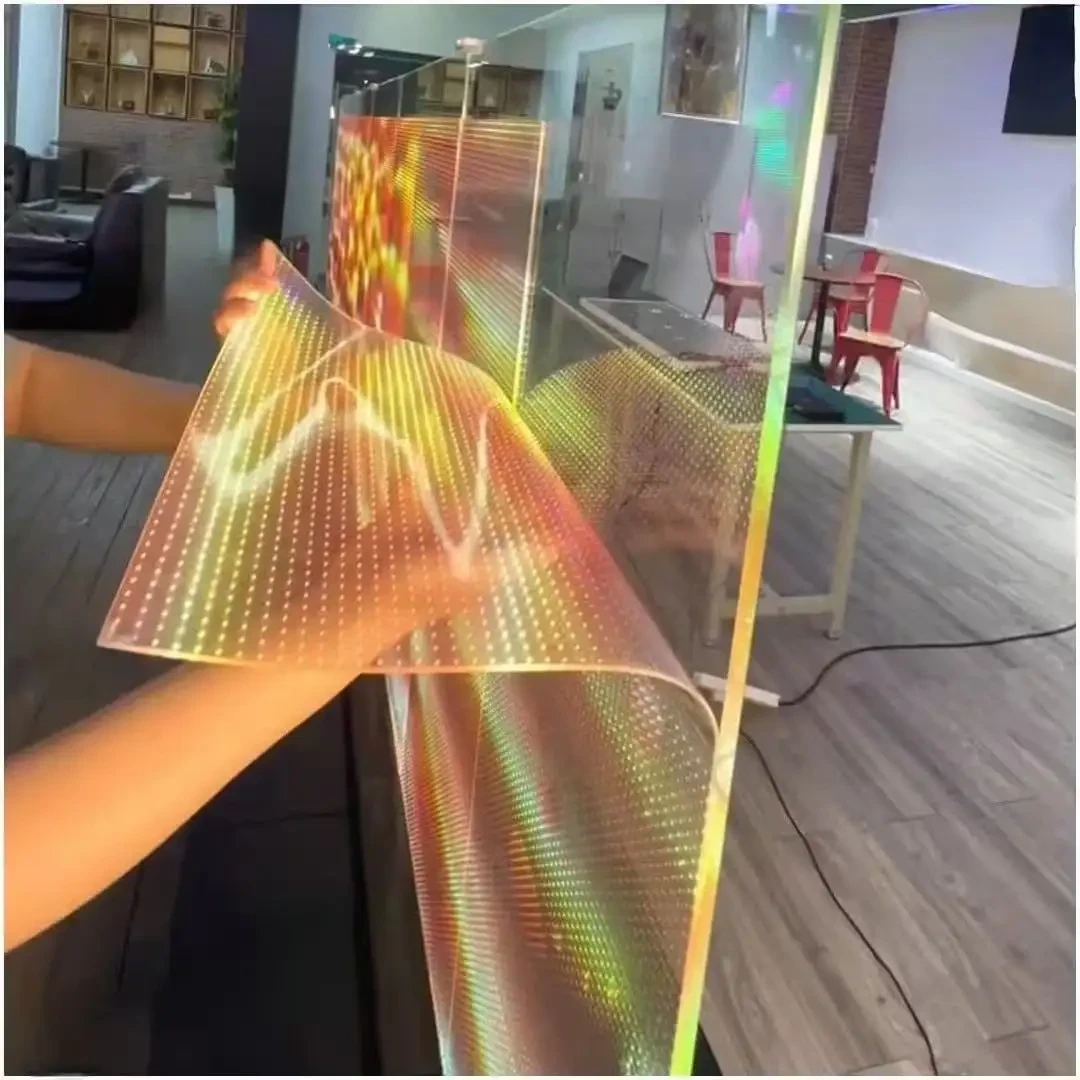
P10 is used on full-height glazing viewed from several metres, where the larger pitch is invisible and the higher transparency is an advantage. It is common on bank branches and retail flagship facades.
Every unit is assembled and tested in Shenzhen before packing. Cabinet drawings, pixel map and control-system settings are supplied with the shipment, so the configuration on site matches the quotation.
Specifications
Engineering decisions behind Crystal Film P10, and what they change on site.
The wider pitch leaves more glass clear, which preserves daylight and the view through the facade.
≤150 W/m² reduces the electrical provision needed for large glazed areas.
Film mounting works on existing glazing without replacing panes or adding mullions.
Crystal Film P10
Crystal Film P10 is a laminated film, not a framed cabinet. The LED mesh, transparent carrier, adhesive layer and protective surface are bonded as one sheet that is applied directly to existing glass.
The pixel grid is laid out to leave open space between LEDs, which is what allows the glass to stay visually open when the screen is off.
A clear carrier holds the mesh at a consistent pitch, and the adhesive layer bonds to glass without a steel frame or visible edge.
Power and data connect along one edge through a slim ribbon. The connection is planned to sit behind a mullion or within a concealed edge trim.
The controller and power supply are remote from the film. Their location is agreed at survey so cable routes stay hidden and serviceable.
The decisions that affect how Crystal Film P10 looks, installs and stays serviceable on site.
The open grid keeps daylight and sightlines through the glass. Transparency is balanced against brightness for the actual background and viewing distance.
The film adds minimal thickness, so it can be used on shop windows and interior glass without rebuilding the frame.
The pixel map is set out around mullions and door frames so content is not cut by the building structure.
Film sections are planned so a damaged area can be replaced without stripping the whole window.
Service is planned before the wall is built. Modules, cards and power supplies are replaced from the access direction agreed on the drawing.
The film surface is cleaned with a soft cloth and approved cleaner. Abrasive pads and solvent cleaners are avoided.
A damaged film section is removed and replaced with a matching batch section. The edge connection is reused where possible.
The remote controller and power supply are reached without touching the glass, so routine service does not disturb the film.
Product credibility
Crystal Film P10 is built on the same production line as our project walls. Cabinets, modules and control settings are recorded per batch, and the documentation travels with the shipment so the site team is not working from memory.
ISO 9001
Factory process control
CE / RoHS / FCC
Product compliance
Batch tested
Aging and calibration record
2–3 years
Standard warranty
Crystal film selection
Crystal film is the right route when the glass already exists and the project cannot carry a framed cabinet. The survey, pitch and controller location decide whether the result looks clean.
The film works best on flat, sound glass with a background that still reads through the open pixel grid. Reflections, tint and mullions are reviewed before the pitch is chosen.
P6.25 is used where the viewer stands close to the window; P10 or larger is used where the audience is across a street or concourse. A finer pitch is not automatically better on glass.
Power and data connect along one edge. The route should sit behind a mullion, frame or trim so the film reads as part of the glass rather than an applied panel.
Model comparison
Pitch, power, cabinet and the job each model is specified for. Open a model to see its cabinet build, service access and quotation route.
| Model | Brightness | Avg power | Cabinet | Specified for | Detail |
|---|---|---|---|---|---|
Crystal Film P6.25 6.25mm | 4,500 nits | ≤180 W/m² | Film roll, cut to glass | Shop windows · Bank branches | View model |
Crystal Film P10Current 10mm | 4,000 nits | ≤150 W/m² | Film roll, cut to glass | Glass facades · Bank branches | Selected |
Holographic P3.9 3.9mm | 1,500–8,000 nits | ≤260 W/m² | Hanging mesh, 500 × 500mm | Retail launches · Exhibitions | View model |
Holographic P6.25 6.25mm | 1,500–8,000 nits | ≤220 W/m² | Hanging mesh, 500 × 1000mm | Atrium suspensions · Window displays | View model |
Standard Transparent P3.91–7.8 3.91–7.8mm | 5,500 nits | ≤280 W/m² | 500 × 500 / 500 × 1000mm | Building facades · Atrium walls | View model |
Standard Transparent P5.2–10.42 5.2–10.42mm | 5,000 nits | ≤240 W/m² | 500 × 1000mm | Shop windows · Interior partitions | View model |
Standard Transparent P10.42 10.42mm | 5,000 nits | ≤200 W/m² | 500 × 1000mm | Glass facades · Atrium glazing | View model |
Typical values for the current series. Final brightness, power and cabinet detail are confirmed on the approved specification sheet.
Deployment playbook
The film is chosen for existing glazing where the storefront must remain open and the installation cannot add a deep cabinet.
Promotions run after hours while the window stays visually open during the day. The film adds a media layer without rebuilding the shopfront.
P6.25–P10 · 90–95% transparency
Rates and brand content sit on street-facing glass. A clean edge route and scheduled content keep the branch front uncluttered.
P6.25–P10 · 1,000–3,000 nits
Vehicle glass and partitions become display surfaces. The film preserves the view into the showroom while adding a transparent content layer.
P6.25–P10 · indoor or semi-outdoor
Delivery control
Crystal film is cut to the glass survey. The film layout, edge connection and controller position are agreed before production.
Handover pack
Cabinet layout, control points, power distribution and the service direction are fixed before materials are cut. The approved drawing becomes the reference for every later check.
LED modules, driver ICs and power supplies are drawn from the same production batch where the order size allows, then labelled by cabinet position.
Assembled cabinets run through an aging cycle and white-balance calibration. Faults found at this stage are corrected before packing, not after arrival.
Cabinets are packed against the transport method and site access. Each film section is labelled by glass panel and packed with the edge connection and cleaning instructions.
Buyer questions
These are the points that most often change the specification after the first enquiry. If your question is not here, send it with the site details.
Ask an engineerYes, that is its main use. The glass is surveyed for flatness, condition and access, and the film is cut to the panel layout before dispatch.
The film can be removed as part of a planned refit, but the glass condition and adhesive residue should be assessed first. Removal and replacement are best handled by the installation team.
The open grid reaches up to 95% transparency depending on pitch. Higher transparency generally means less light output, so the pitch is selected against the viewing distance and background.
Indoor and semi-outdoor versions are available. Full outdoor exposure requires a review of water, sun and cleaning conditions; a framed transparent cabinet may be the more suitable route.
Next step
Use the retail guide, transparent white paper and case references to confirm film pitch and edge routing.
See how this series is specified against viewing distance, room light and installation constraints.
Open application guideReview project types, cabinet formats and the delivery scope used on comparable installations.
View case studiesRequest the current specification sheet, cabinet drawing and control compatibility list.
Open downloadsSend the wall size, viewing distance and site photos. We reply with a configuration and quotation.
Request a quote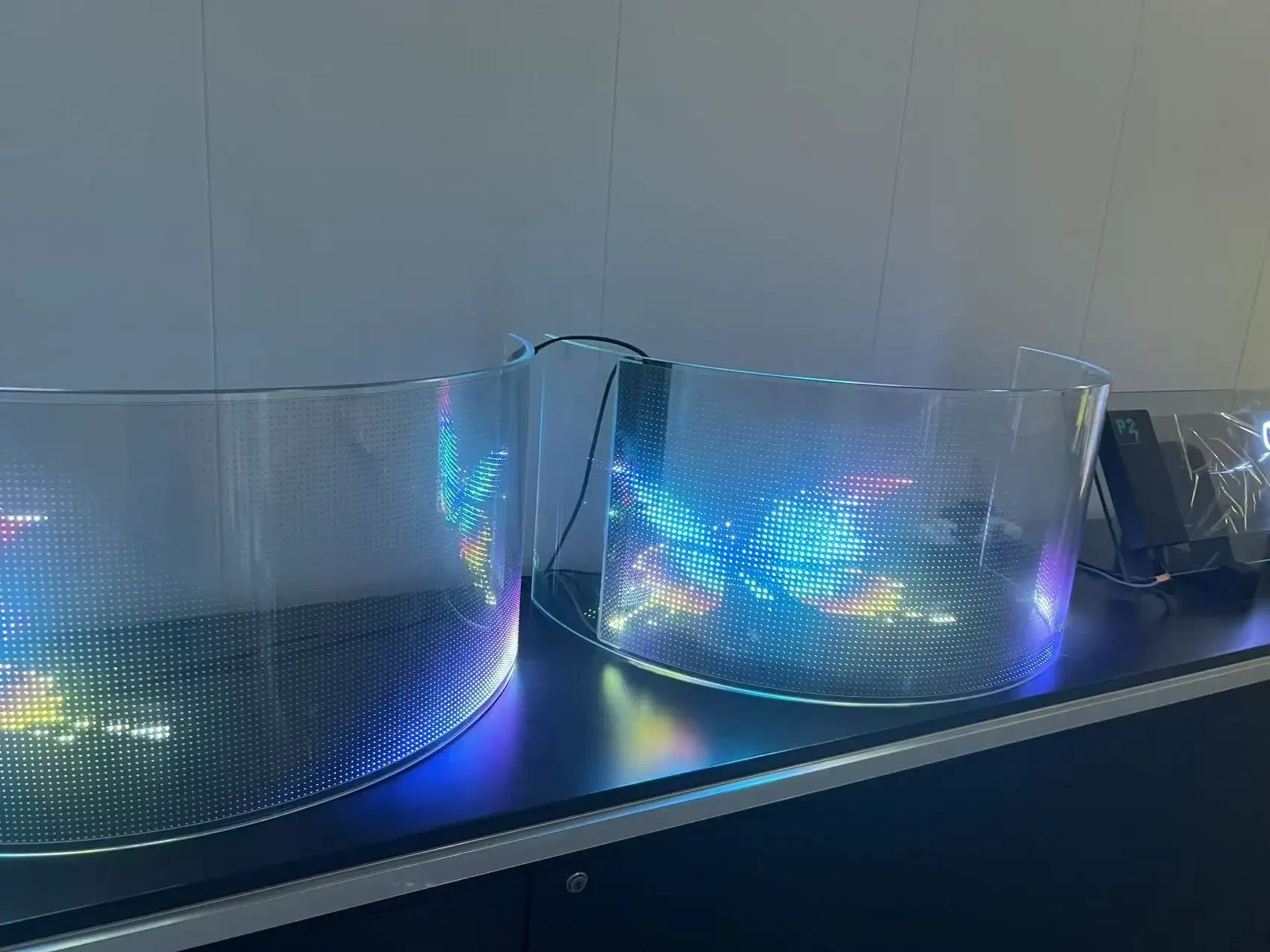
Crystal Film P6.25
6.25mm · 4,500 nits
Film roll, cut to glass

Holographic P3.9
3.9mm · 1,500–8,000 nits
Hanging mesh, 500 × 500mm
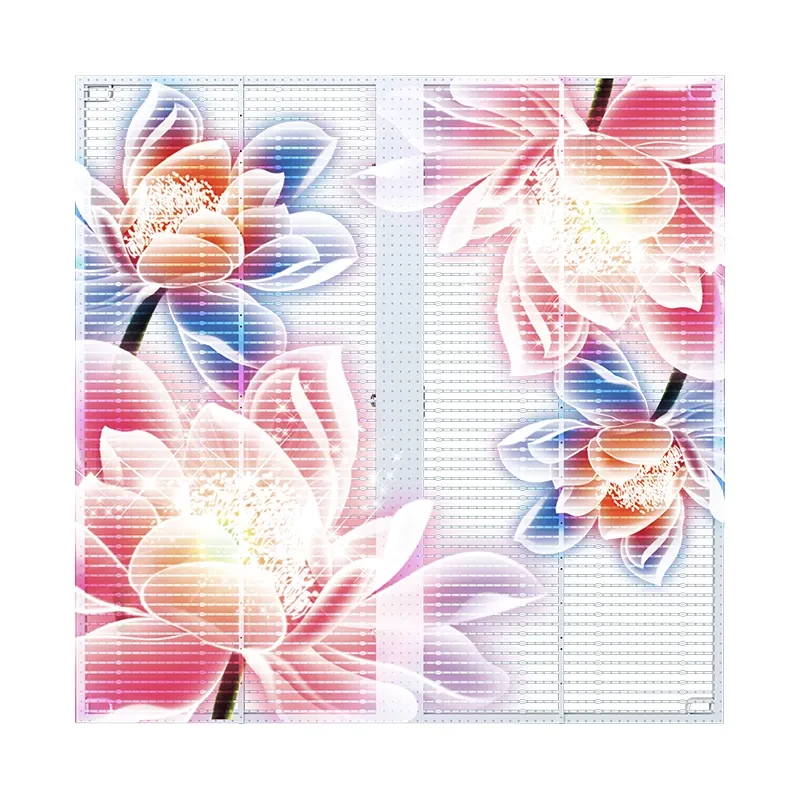
Holographic P6.25
6.25mm · 1,500–8,000 nits
Hanging mesh, 500 × 1000mm
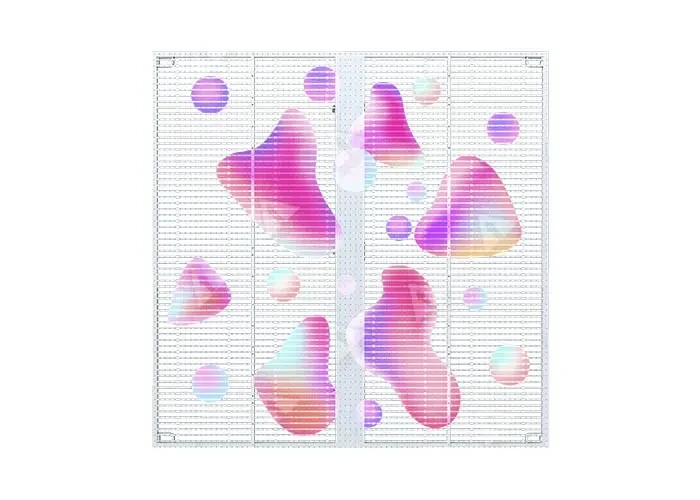
Standard Transparent P3.91–7.8
3.91–7.8mm · 5,500 nits
500 × 500 / 500 × 1000mm
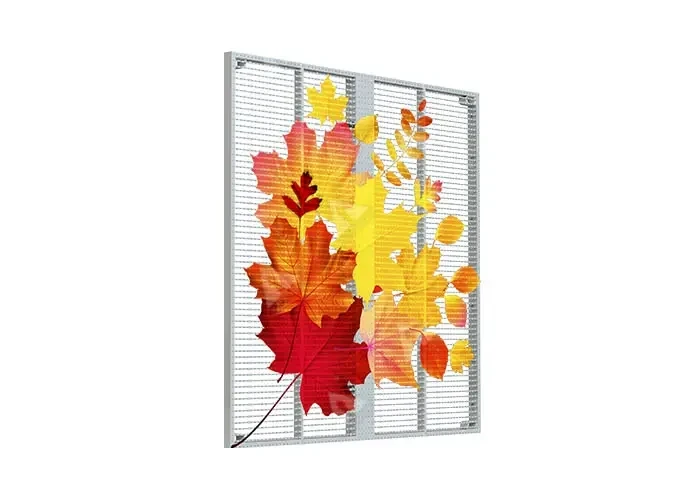
Standard Transparent P5.2–10.42
5.2–10.42mm · 5,000 nits
500 × 1000mm
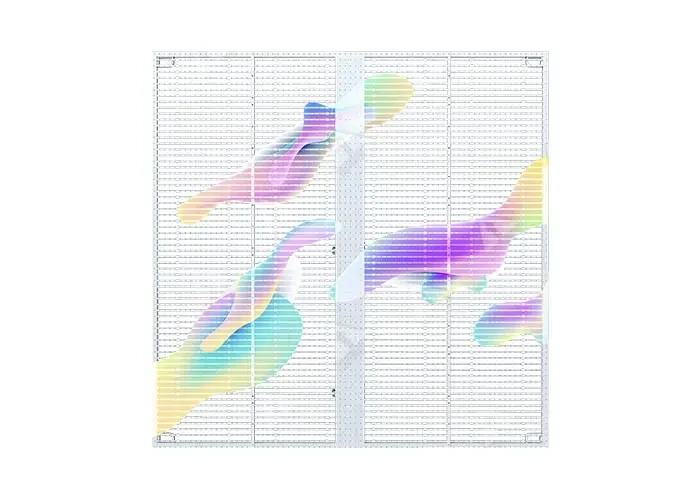
Standard Transparent P10.42
10.42mm · 5,000 nits
500 × 1000mm
Send viewing distance, wall size and installation type. We reply with cabinet quantity, control layout and a quotation within 24 business hours.